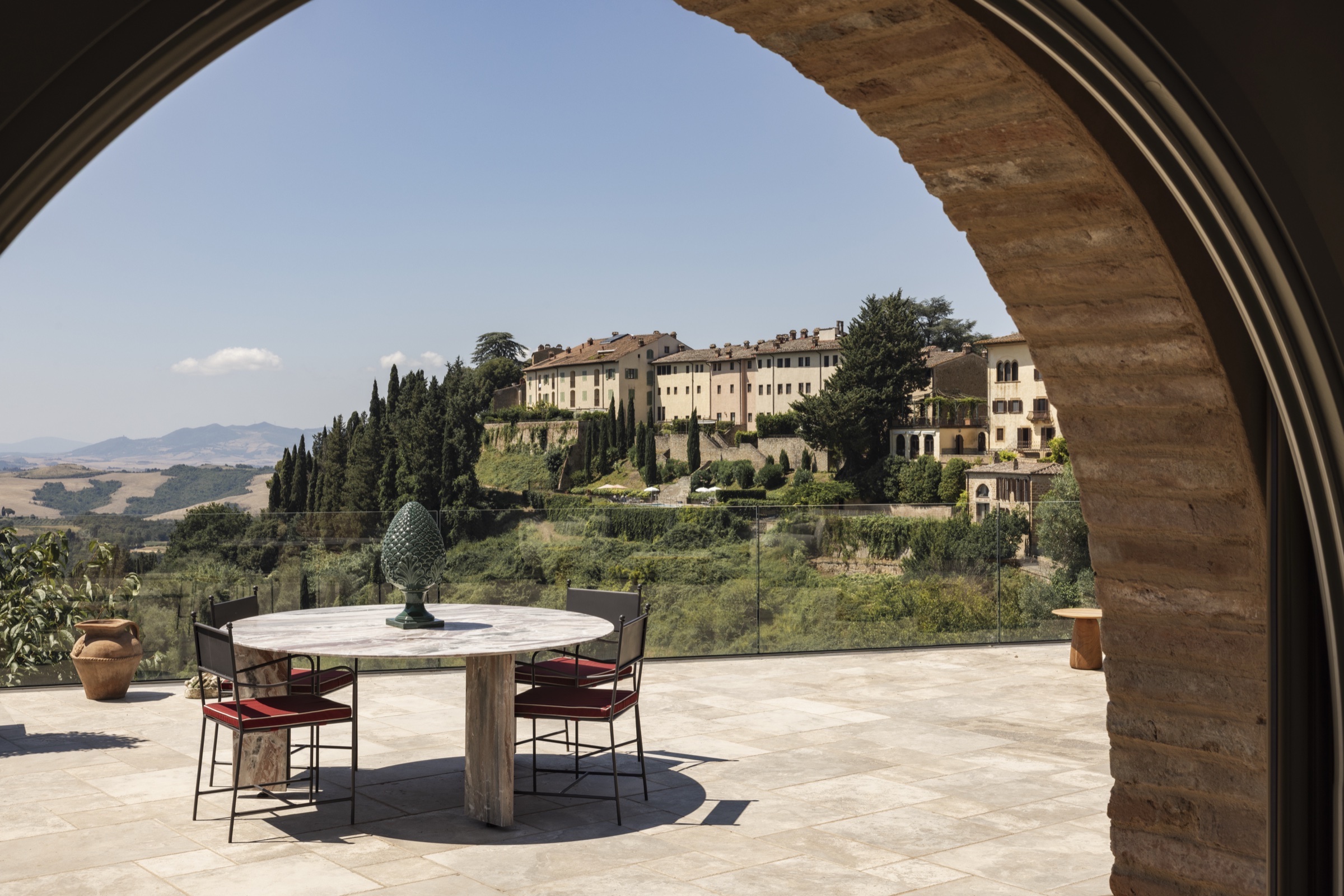
Historic Castle Villas in Tuscany: Borghi & Estates
Historic Castle Villas in Tuscany: Borghi & Estates
Tuscany has hundreds of historic castles, borghi (medieval hilltop villages), and fortified estates. But only a small fraction are licensable for luxury stays — the rest are day-visit museums, ruins, or restricted heritage sites. This guide separates the two: which castles you can sleep in, which you can only visit, and how the licensable estates compare.
A complete guide to historic Tuscan castle villas — featuring Castello di Vicarello and Dimora del Ghirlandaio — plus the licensing rules that determine which estates are actually stayable.
Which Tuscany Castles Are Actually Stayable
Not every castle in Tuscany can be booked for overnight stays. Italian heritage law classifies historic buildings into three main categories, and only one of them is licensable for guest accommodation:
1. Privately-owned and restored: These castles are owned by families or investment groups who have restored them as luxury residences or hotels. They can legally accept guests and often function as villa estates. Castello di Vicarello and Dimora del Ghirlandaio fall into this category.
2. Publicly-owned (state or comune): Many Tuscan castles are owned by the Italian state or local municipalities. They are open for daytime visits, guided tours, and occasional events — but not for overnight guest stays. This is the majority of famous castles in Tuscany.
3. Protected heritage sites (UNESCO, Sovrintendenza): The most protected class. These are cultural landmarks with heavy restrictions — sometimes only open a few days per year, and never licensable for accommodation. If a castle is a UNESCO site, it cannot be booked.
Our Tuscany historic castle villas collection is carefully curated — every property is licensed and offers genuine stay experiences.
Two Flagship Castle Estates in Tuscany
Our portfolio includes two flagship historic estates — each representing a different era of Tuscan castle architecture and each offering a distinctly different stay experience.
Castello di Vicarello
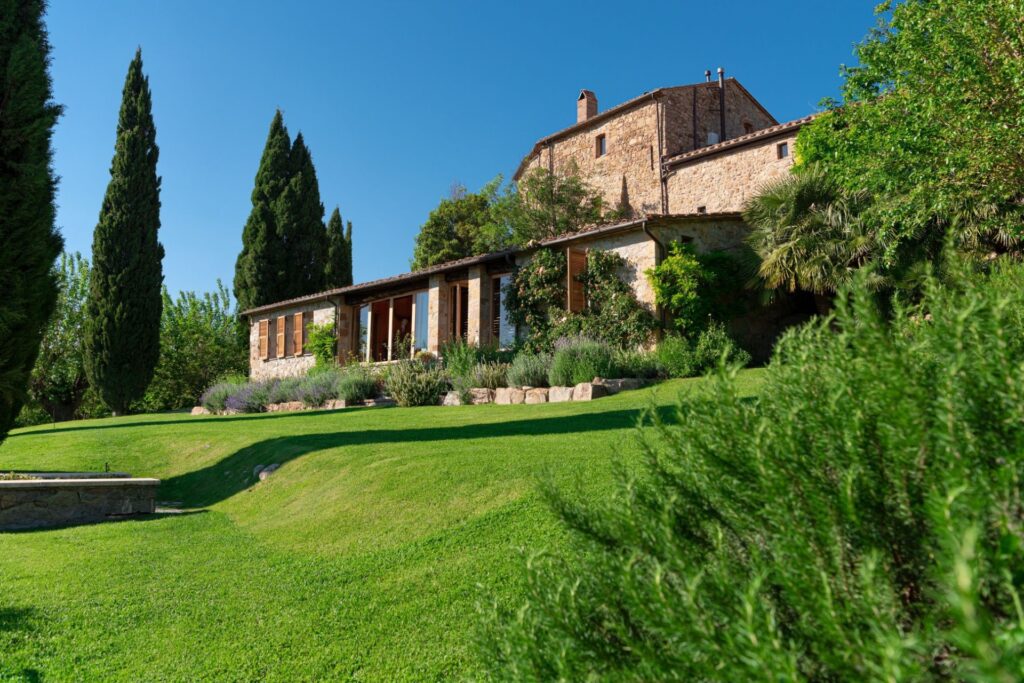
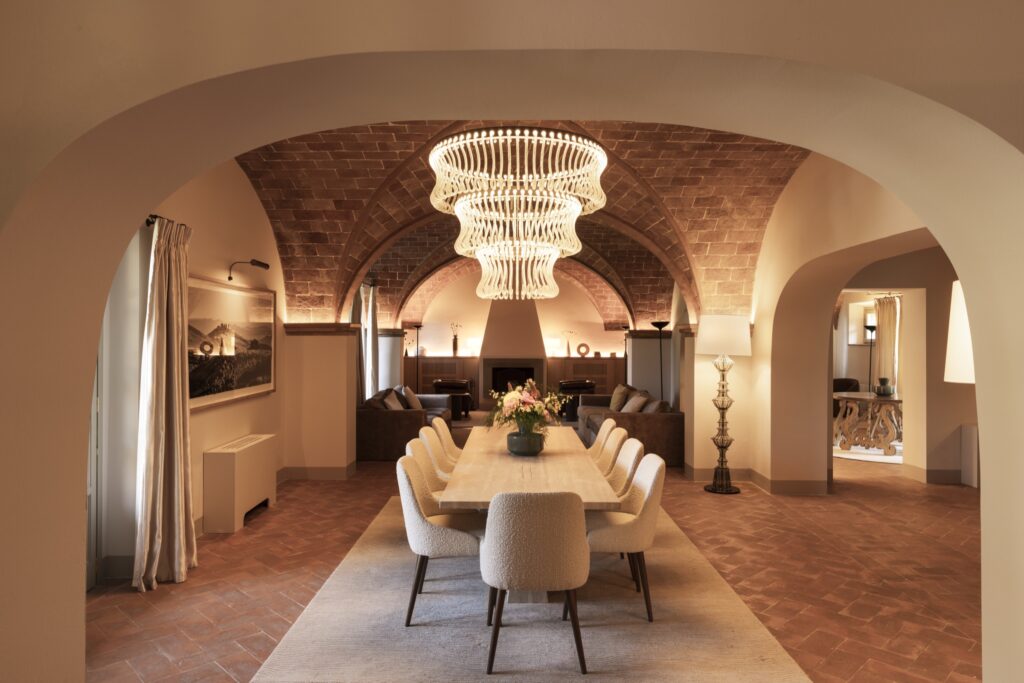
A 12th-century castle in the Maremma, restored as a luxury estate with historic cloisters, a chapel, and a working wine cellar. 50 hectares of private vineyard, Michelin-trained chef brigade, and cellar-to-table dinners. One of the few true castle stays in Tuscany.
BEST FOR: MICHELIN DINING · CASTLE ATMOSPHERE
Dimora del Ghirlandaio
A 20-bedroom historic estate in the Chianti hills, 30 km south of Florence. The largest villa in our Tuscany portfolio (up to 37 guests), with expansive grounds, a working farm, and event capability for large-group stays. Not a castle per se, but a fortress-era estate with original stone architecture.
BEST FOR: LARGE GROUPS · EVENTS · MILESTONES
Planning a Historic Castle Stay?
Our concierge arranges castle-stay experiences across Tuscany, including Michelin dining, wine tastings, and event coordination for historic estates.
Borghi: The Medieval Village Alternative
Not all historic Tuscan stays are castles. Many of the finest restored estates are borghi — small medieval villages built around a central piazza, often with a church, a tower, and 20–50 restored buildings. Several of these have been converted into luxury villa estates, with individual guest houses across the village and shared communal facilities.
The borghi experience is different from the castle experience. Instead of one grand building with historic interiors, you get an entire walled village to yourself — courtyards, cobbled lanes, and the ability for each family to have its own cottage within the village walls. Borghi are particularly good for large groups and multi-day events.
Several of our Tuscany villas are on the Castelfalfi estate — a restored medieval borgo that has been converted into a luxury resort with villa rentals. Il Fienile, Casale 1 Bianchi, and Casa Medici are all within the Castelfalfi borgo, giving guests access to the village’s restaurants, spa, and shops. For event-focused stays, see our Tuscany Villa Weddings guide.
Four Features to Look For in a Historic Estate
A restored castle or borgo can be a stunning stay — or a frustrating one. These are the four features worth confirming before booking.
Heating & Insulation
Historic buildings were not designed for modern central heating. Confirm that the restored estate has adequate heating for every bedroom, especially in shoulder season (April, October). Stone walls absorb cold, and some castles take hours to warm.
Bathroom Count & Privacy
Older castles sometimes have fewer bathrooms than modern villas. If you’re booking a historic stay for 8–12 guests, confirm that every bedroom has an ensuite bathroom, or that bathrooms are strategically distributed across wings.
Kitchen & Chef Facilities
Many historic castles were not originally designed with modern kitchens. If you plan to have a private chef, confirm the kitchen is adequate for professional service — good ovens, enough refrigeration, and enough counter space for a team. See our Tuscany Villas with Private Chef guide for context.
Outdoor Space & Pool
Historic estates can have limited outdoor space — some castles are built on hilltops with steep terraces. Confirm the pool, garden, and outdoor dining capacity meets your group’s needs, especially for summer stays. For pool-focused villas, see Private Pool Villas in Tuscany.
Comparing Castle and Borgo Estates
Here’s how the historic estate formats compare — for the stay experience and for what they best suit.
Explore Tuscany in Depth
Looking for a different style of Tuscan stay? Explore our other guides.
Frequently Asked Questions: Historic Castle Villas in Tuscany
Can you stay overnight in a Tuscan castle?
+
What’s the difference between a castle stay and a borgo stay?
+
Are castle villas in Tuscany good for families?
+
Can we host a wedding at a Tuscan castle estate?
+
When should we book a historic castle stay in Tuscany?
+
Are historic castle villas suitable for winter stays?
+
Reserve Your Tuscany Castle Stay
Connect with the ShavyStays Private Concierge to explore Castello di Vicarello, Dimora del Ghirlandaio, and other historic Tuscany estates — complete with Michelin dining, wine pairings, and event coordination.